


Happy Monday. 👋
Welcome back to another week and another roundup of some positive climate news. There’s a lot to cover, from grids and green homes to choc-free chocolate and 10,000 companies locking in science-based targets. A good week to remember that underneath the noise, the transition keeps grinding forward.
Looking forward to another big week. Have a good one folks. Oh and before you read this episode, do think about sharing it with a friend, colleague or family member. It really helps fuel my ego and boosts my dopamine - so thank you in advance.
👀 News to make you feel good this week
🇮🇳 India’s budget and the grid that can actually handle all those renewables. India’s 2026 budget debate is shifting from “more solar and wind” to “how on earth do we move and store all this clean power”, with industry calling for serious investment in transmission, battery storage and grid readiness instead of just more generation targets.
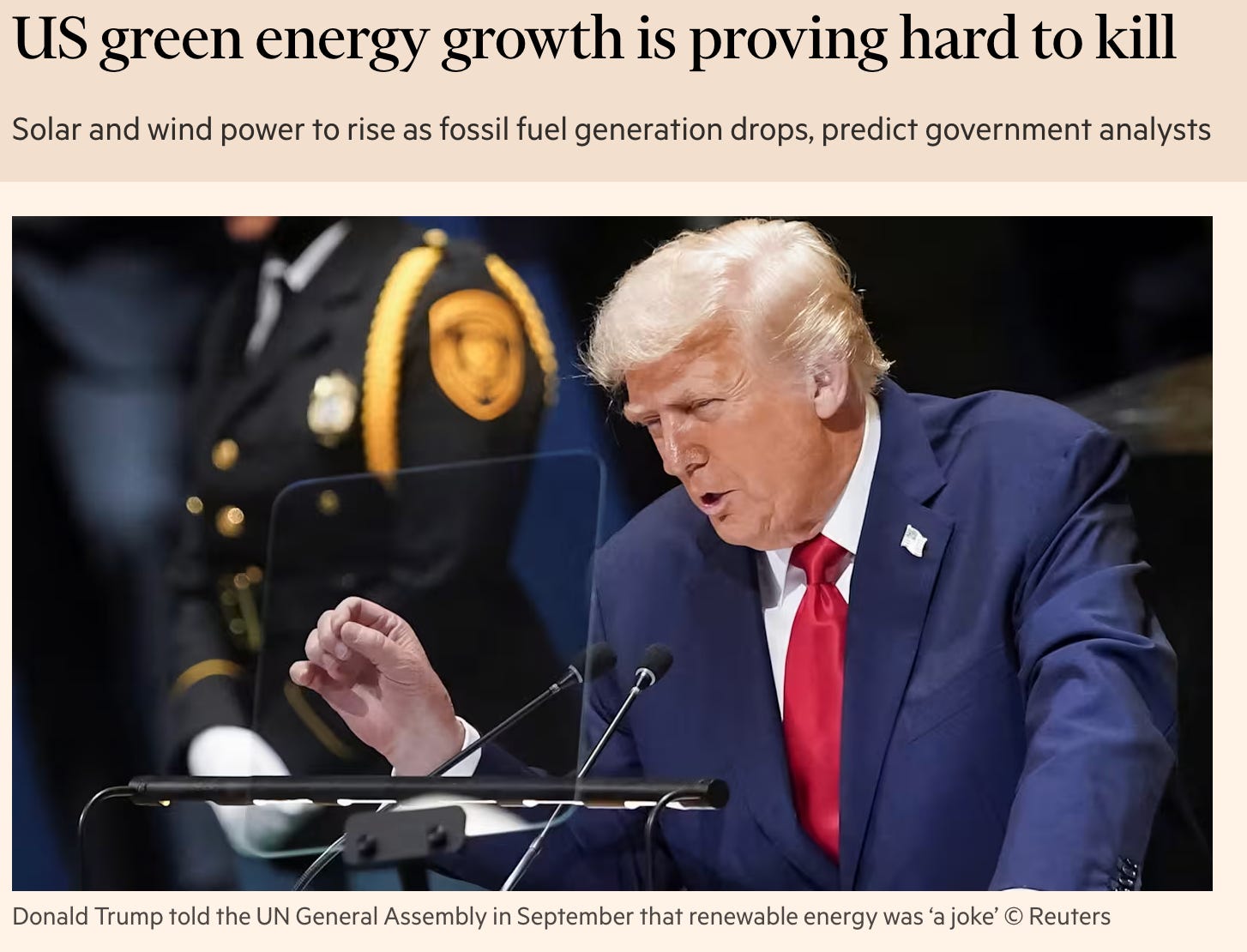
⚡ US green energy growth that’s “hard to kill”. New reporting shows that, despite political swings and noisy pushback, US green energy deployment keeps climbing, supported by policy tailwinds and simple economics.
Once supply chains, factories and jobs are in place, it turns out “rolling back” clean energy is a lot harder than talking about it.
⚡ France has so much clean power it has to pay to export it. France is producing more electricity than it consumes, to the point where power producers are sometimes paying to export surplus – a weird but revealing side-effect of a low-carbon-heavy system with strong nuclear and growing renewables.
💭 My thoughts? All three of these stories point to the same thing: clean energy is no longer the hard part, and the real challenge is moving, storing and integrating power once it is already flooding the system.
🔬 Solar cells keep quietly getting better. Perovskites, a new class of solar material that can be printed cheaply rather than baked like silicon, have gone from a lab curiosity to a serious contender in just over a decade. Their efficiency has jumped from around 3% in 2009 to 25%+ today, with tandem versions stacked on silicon topping 30% in lab tests, well beyond standard solar panels. Researchers are also cracking the durability problem, pushing stability from hours to thousands of operating hours under heat and light. It’s all too smart for me, but it sounds great!
🏡 £15bn to make UK homes less leaky and less expensive. The UK’s new Warm Homes Plan promises £15bn over five years for solar panels, heat pumps and batteries, with grants and low-interest loans designed to make green tech accessible beyond the wealthiest households.
Done right, that’s millions of homes with lower bills, less exposure to gas price shocks and a quiet rooftop solar boom baked into policy. Put that in your pipe and smoke it Reform…
🏭 10,000 companies now have science-based targets. The Science Based Targets initiative has just hit 10,000 validated companies, up from 1,000 in 2021 and adding nearly 3,000 in 2025 alone, with particularly rapid growth in Japan and the wider Asia region. That doesn’t mean all 10,000 are climate heroes, but it does mean targets aligned with 1.5°C pathways are moving from fringe to default in corporate strategy.

🏢 Is corporate climate ambition dead, or are we just in an era of greenhushing? Nestlé’s chief executive has openly blamed President Trump’s stance and backlash for the company going quieter on sustainability communications, underlining how politicised the space has become in the US. The flip side: even as some brands go quieter in public, the SBTi milestone shows the underlying machinery of targets, reporting and transition plans is still accelerating.
🍫➕🌱 Can we make chocolate more affordable and better for the planet? Chocolate is incredible. If you disagree with that, please unsubscribe from this blog. It’s climate impact, on the other hand, a cause for concern. Not only that, but extreme weather and interrupted harvests have caused prices to rise significantly in the last few years. Prefer, a company developing cocoa-free and cocoa-light chocolate alternatives, is testing a different approach, with pilots in places like Singapore aimed at easing both “chocflation” and deforestation by creating cocoa from fermentation. Genius.

🌱 So you want to work in climate? This came up on my LinkedIn feed again this week and I remembered how great of a resource Nicole Kelner put together. So, if all of this makes you want to move into the transition rather than just read about it you should check out the roles in the link here.
That’s all for this week folks. Here’s my song choice for the week, unsure why, but it’s been played a lot the last few weeks. It’s hard not to want to bop.
George, the Grumpy Optimist 💚