


Happy Monday. 👋
Welcome back to this week’s episode. Last week was a big one for me and the company I help run, Zevero. We announced that we raised another $7 million to help scale our mission and I was shortlisted for Green Business’ Entrepreneur of the Year. How cool?

‼️I also have other interesting news for you I am hosting a The Grumpy Optimists event on the 7th May in London! I’d love to meet you all.
News to make you feel good this week
💨 Great Britain breaks its wind generation record, again. On March 25, wind hit 23,880 MW, accounting for 53.5% of the electricity mix at peak. Gas was squeezed to just 2.3%, the lowest since April 2024. Clean energy now provides around 60% of UK electricity, up from 3% in 2000. I feel like I’m constantly finding articles like this and long may it continue.
📈 IEA signals the clean tech market could more than double to $3 trillion by 2035. Currently worth $1.25 trillion, the market size of technology like solar panels, batteries, EVs and heat pumps is approaching the size of the global crude oil market.
💭 My thoughts? I wonder how collective voices can help amplify the value of the clean tech market. We all know the value that the oil lobby has, how can we do the same for clean tech?
⚖️ Policy corner
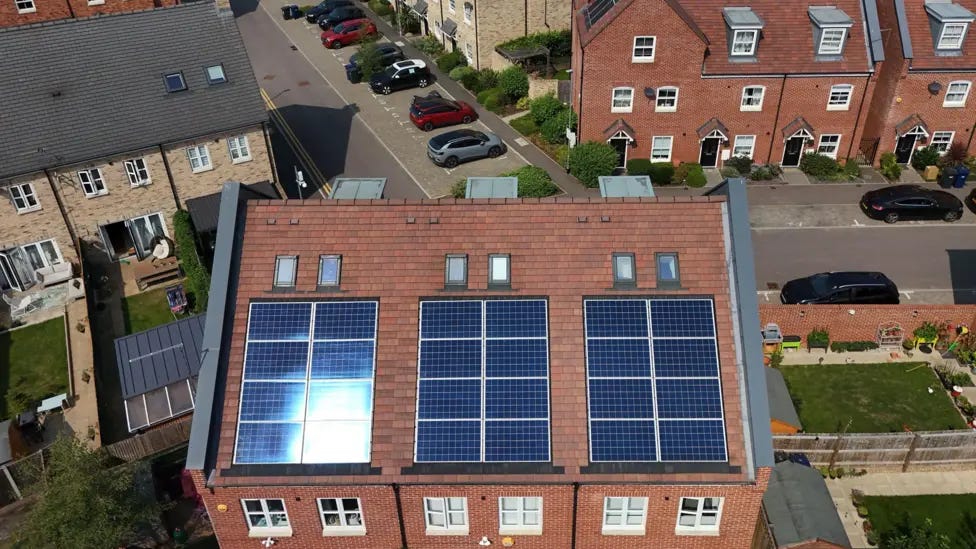
🏠 Heat pumps for all new homes and plug-in solar in green tech drive. The UK’s Future Homes Standard will require heat pumps in all new homes from 2026, and Ed Miliband simultaneously announced plug-in solar panels, already common in Germany, will be made available in the UK for the first time. This alongside the next renewables auction has also being pulled forward to July shows that the the Middle East energy crisis is doing what years of climate advocacy could not. It’s creating genuine political urgency around domestic clean energy.
🇮🇳 India updates its climate targets: 60% non-fossil power by 2035. While some critics are arguing this is weak, I think we need to see the positives in this. Shock. Buried in the detail is the fact that India has already hit its previous target of 50% non-fossil power capacity five years ahead of schedule. Analysts think the new 60% goal will be met by 2028. While the ambition is soft it appears to be a classic case of underpromise and overdeliver.
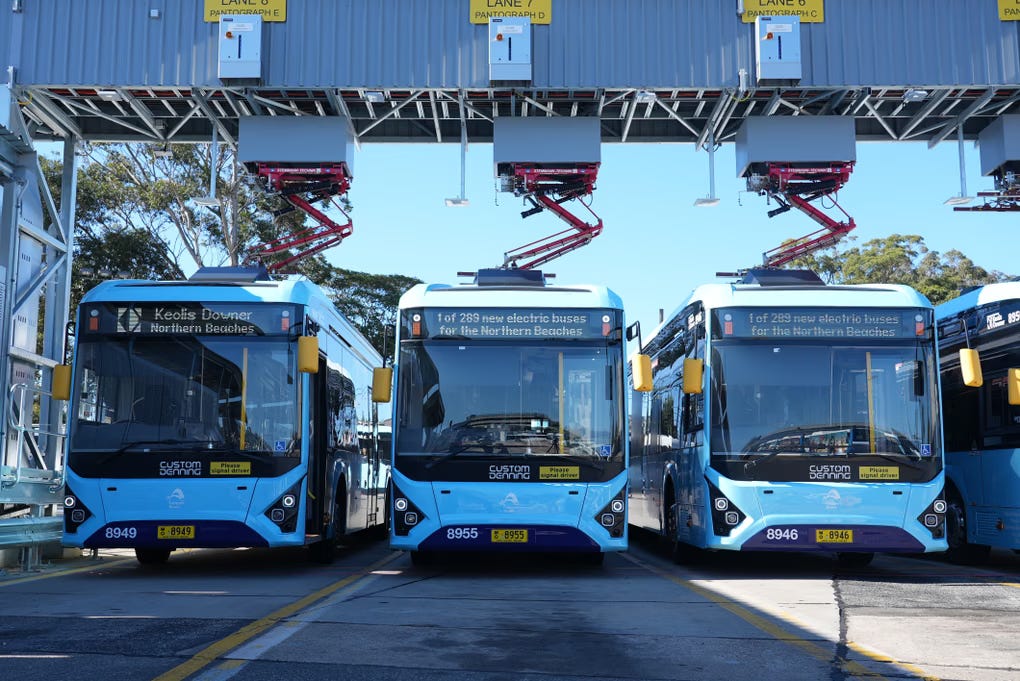
🚌 Australia’s fuel crisis is accelerating the electric bus transition. With diesel hitting record prices as the Middle East conflict disrupts supply, Australian state governments are fast-tracking EV bus orders. In Australia, just 1% of buses are electric, compared with 80% of the urban fleet in China, a quarter in the Netherlands and 12% in the UK. The argument for electrifying public transport used to be climate. Now it is also fuel security and basic economics.
🌿 Nature doing its thing
🐋 Scientists film sperm whales working together to help one of their own give birth. In July 2023, researchers from Project CETI were tracking a sperm whale off Dominica when eleven whales bunched together near the surface. They launched drones. A calf was born and the group, including non-relatives from two separate family lines, worked together to lift the newborn to the surface so it could breathe. Published this week in Science and Scientific Reports, it is the first quantitative evidence of cooperative birth assistance outside humans and primates. Scientists say the behaviour may predate the last common ancestor of toothed whales more than 36 million years ago.
🦋 Monarch butterfly population up 64%, the largest recovery since 2018. The butterflies occupied 7.24 acres of Mexican forest this winter, up from 4.42 the year before. Scientists put the minimum safe threshold at 15 acres, so the risk of extinction hasn't gone away. But this is the second consecutive year of growth after a near-catastrophic low in 2023/24, driven by conservation work on the ground, better weather and a sharp reduction in illegal logging in the reserve.
🦅 Rewilding in Scotland delivers dramatic gains for birds and pollinators. New research from the Northwoods Rewilding Network, more than 100 landholdings across Scotland, found that bird species are up 261% and breeding territories up 546% on rewilded land compared to neighbouring conventionally managed sites. Bumblebees and butterflies are up more than tenfold. Spotted flycatcher, cuckoo and woodcock, all in national decline, are relatively common on rewilded sites. The researcher who analysed the data described the results as “astonishingly clear.” Several sites combine nature recovery with active farming and tourism. It does not have to be either-or.
My music recommendation for the week is Spanish Sahara by Foals, a great, great tune to start the week with. Speaking of, have a great one!
George, the Grumpy Optimist 💚