


Happy Monday. 👋
Welcome back to the 162nd edition of The Grumpy Optimists. This week I have two updates before we get into it. One cool, one an update for the event I’m hosting on 7th May.
🎆 One, I got on the Forbes 30 under 30 list for social impact!!
This is not something I was expecting or aiming for, but it’s cool to see the hard work paying off over the last 5 years.

🎫 Two, I’ve made some updates to The Grumpy Optimists event.
I’ve had a lot of people saying they’d love to go but can’t get the time off. So the lovely people at the Lucky Saint have given us the room until close.
The event will now be from 5.30pm onwards with a 6pm start time. You can find more info and request a spot here. Be quick, there aren’t many left!
⚡ Cheap is the new clean
⚡ Why cheap power could matter more than clean power in the push for net zero. A decade ago the argument for renewables was moral. Now it’s economic. The BBC lays out how falling costs, rather than climate policy, are doing most of the heavy lifting on emissions. Not the most romantic framing, but arguably the one that sticks.
💭 My thoughts? Years of climate comms tried to make people care about the right thing. Turns out the best decarbonisation strategy is to make clean power the cheapest option and let human self-interest do the rest.
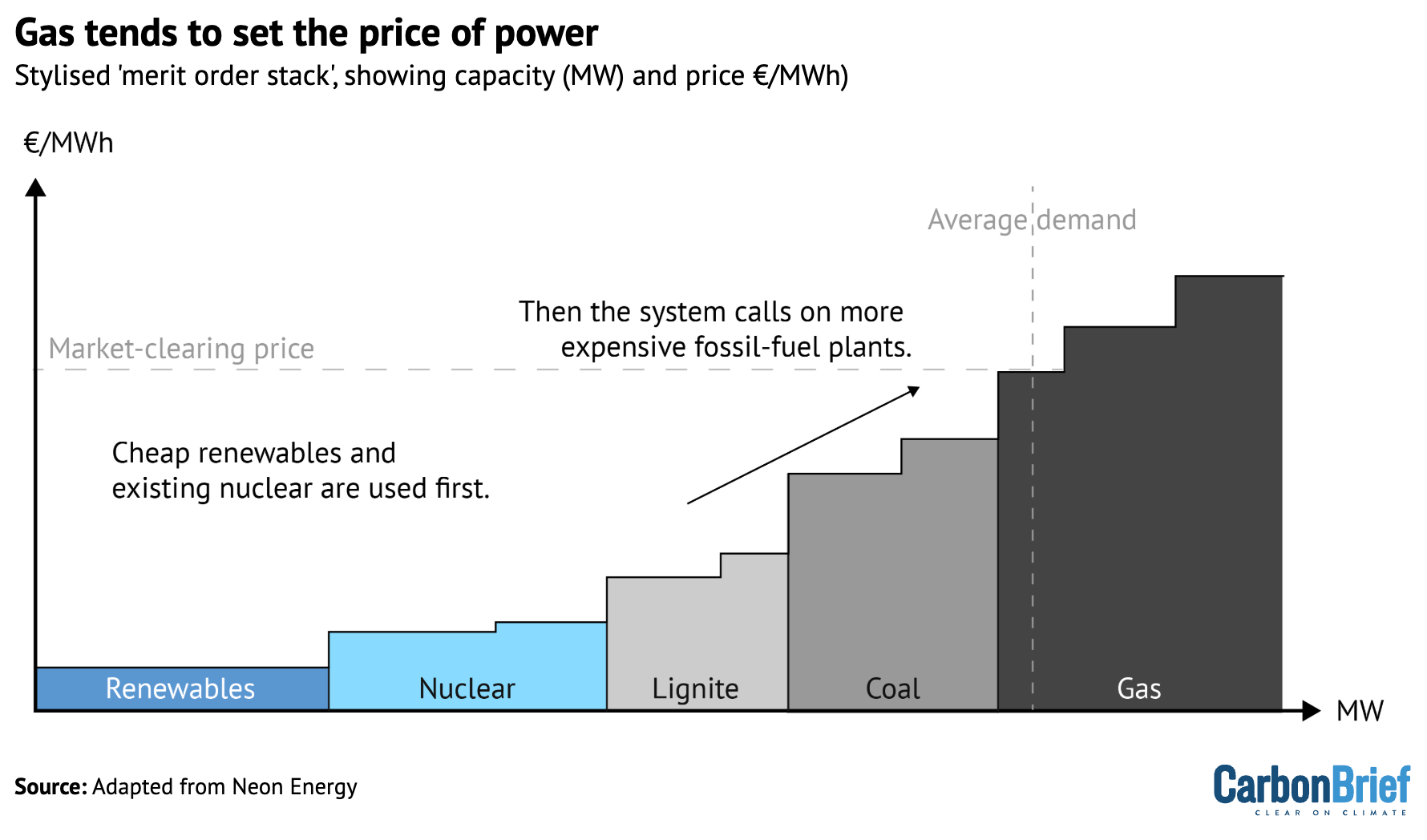
🇬🇧 Reeves looking to break link between gas cost and electricity prices. The UK’s marginal pricing model means gas sets the electricity price even when renewables dominate the grid, which is why bills stay punchy on sunny, windy days. The Chancellor is reportedly eyeing reform to decouple the two. If she pulls it off, it would be one of the most consequential electricity market changes in a generation. You can read a deep dive from Carbon Brief here.
🧺 Households could get free electricity for doing washing on sunny weekends. Britain’s grid operator is expanding the Demand Flexibility Scheme so that when renewables flood the system, providers can pay households to use more electricity, not less. British Gas, Octopus and Equiwatt are all in. Smart-meter households could get free electricity, cheaper rates, or gift-card points on sunny, windy weekends when the grid has more clean power than it knows what to do with.
⚛️ Rolls-Royce signs deal with UK to deliver fleet of small modular nuclear reactors. Rolls-Royce SMR has signed a firm contract with Great British Energy – Nuclear to deliver the UK’s first three small modular reactors at Wylfa in North Wales. It follows the company’s selection as preferred technology partner in June 2025 and sits inside the government’s “Clean Energy Superpower” plan, backed by £2.5 billion of public money plus a £599 million facility from the National Wealth Fund. Wylfa has been on every UK nuclear wish-list for nearly two decades. This is the first time there’s a contract, a technology, and a supply chain attached to it.
🦪 More than 15 million oysters to be released in the North Sea for UK rewilding project. Native oysters were once so abundant you could walk sections of the British foreshore on their shells. Then we ate them. This reintroduction is one of the more ambitious marine rewilding efforts this country has tried, and the knock-on effects go well beyond the oysters themselves. A single oyster filters up to 200 litres of seawater a day. Do the maths on 15 million.
🌲 Defensive rewilding: wetlands and forests as border infrastructure. New research from the University of East London introduces the concept of “defensive rewilding”: deliberately restoring peatlands, forests and wetlands along contested borders to shape terrain in ways that slow or redirect military advances, while also storing carbon and rebuilding biodiversity. The authors frame it as a response to the growing “guns versus climate” trade-off, pitching restored ecosystems as a genuine force multiplier rather than a nice-to-have. Peatlands come out as the standout example. Their soft, low-bearing ground is notoriously hard for even light armoured vehicles to cross, and they happen to be one of the most effective long-term carbon stores we’ve got. The study draws on First World War flooding and, more recently, Ukrainian floodplains slowing armoured advances.
💭 My thoughts? For decades we drained wetlands, felled forests, and straightened rivers to make land productive. Now we’re restoring them because they stop tanks. The climate case didn’t win on its own. The security case came to the rescue. I’ll take the outcome and skip the philosophy lecture.
🎵 Music recommendation for the week is Bleachers, you and forever.
Have a great one!
George, the Grumpy Optimist 💚
I’m very proud of you and you fully deserve all the recognition, you’ve worked so hard over the last 5 years! Fantastic achievement George x