


Happy Monday. 👋
Welcome back to another episode of The Grumpy Optimists from Tokyo, Japan. I’m here visiting the team we’ve built here, meeting investors, partners and generally being inspired by how much knowledge we can bring form Europe and how much we can learn from Japan’s climate progress.

👀 News to make you feel good this week
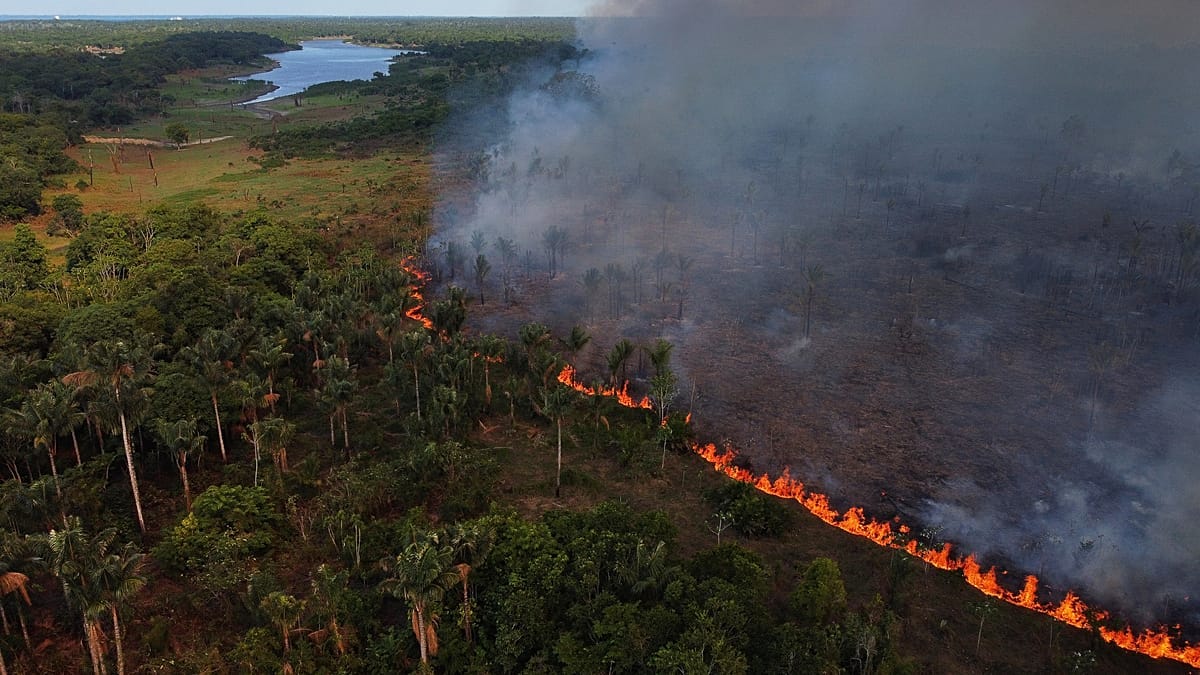
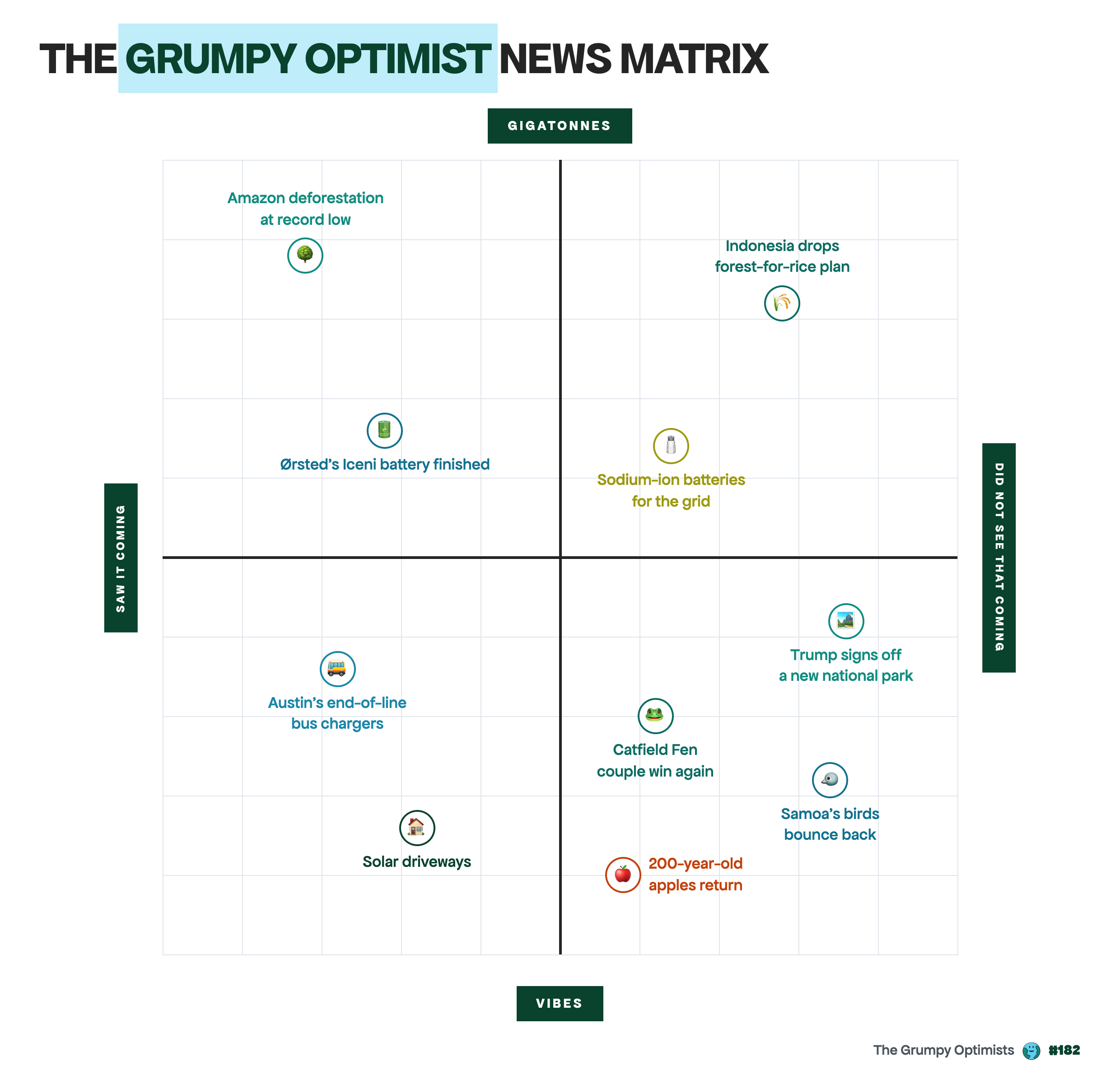
🌳 Amazon deforestation hits its lowest level since records began in 1988. I feel like I’ve featured a lot about Brazils’ rainforest recently, but for good reason. Brazil lost 3,335 km² of Amazon rainforest between August 2025 and July 2026, down 41.8% on the year before, according to official satellite data released on 16 October. The caveats are real, though. Fire, logging and drought now degrade about 40% of the Amazon, and fire counts have tripled since the first round of the election on 4 October.
💭 My thoughts? This is about the clearest proof we have that deforestation is a policy choice.
🌾 Indonesia calls time on clearing forest for rice. Indonesia says it reached rice self-sufficiency three years early, so roughly 4 million acres of rainforest, peat swamp and wetland in Kalimantan and South Papua that were earmarked for rice estates will be left alone. Future food and biofuel expansion is supposed to happen on degraded land instead. It’s not confirmed, and the land isn’t off limits, but it shows balancing food production and protecting nature is a difficult balance.
🚌 Austin’s electric buses now top up at the end of every line. Austin’s transit agency, CapMetro, has electrified two rapid bus routes and opened two park-and-rides where an overhead charger drops onto each bus at the end of the line. Its operations chief says that stretches a bus from about 8 hours of service to 20 to 22, which is what makes buses every 10 to 15 minutes possible. It’s not glamorous, but frequent, reliable public transport is how you actually get people out of cars.
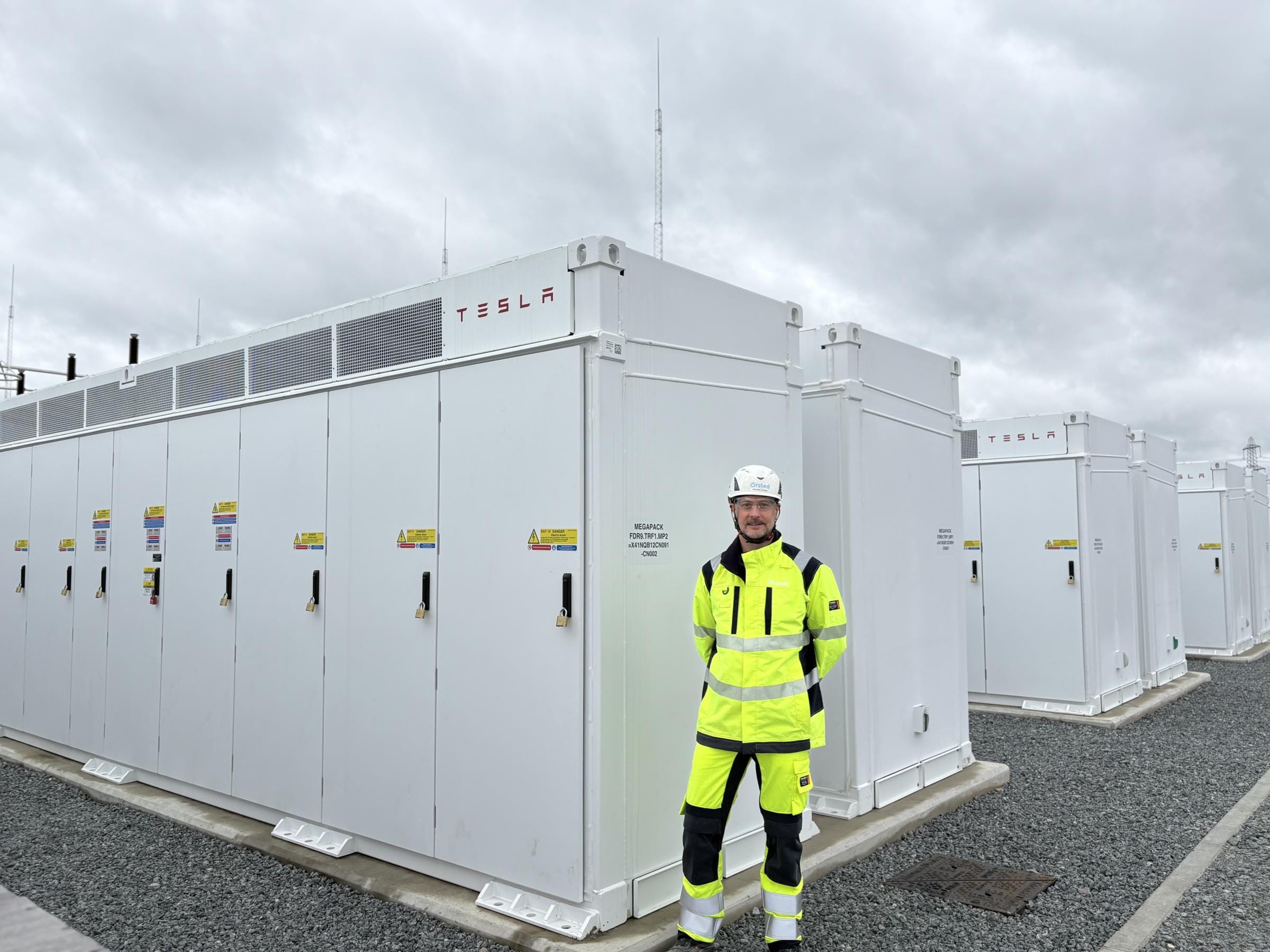
🔋 Ørsted finishes building one of Europe’s largest batteries, in Norfolk. The 300MW / 600MWh Iceni battery is 170 Tesla Megapacks sitting next to the onshore converter station for the Hornsea 3 offshore wind farm. It took about 18 months from the ceremony marking the start of construction. It isn’t switched on yet, though commissioning has started. It’s Ørsted’s first big battery in the UK, and once it’s running it’ll be one of the largest in Europe.
💭 My thoughts? It was finished in the same week the government approved drilling at the Jackdaw gas field. One of those is a bet on the energy system we’re building, the other on the one we’re meant to be leaving.
🚗 Europeans are turning driveways and patios into mini solar farms. Start-ups like Hungary’s PLATIO and Yorkshire’s SolarPave make panels from toughened, anti-slip glass that you can walk or park on. Panels lying flat lose out to angled roofs, and dirt doesn’t help, so the payback maths is fuzzy. But not everyone has a good roof, and SolarPower Europe reckons solar has saved the EU €40bn in gas imports since the Iran war began.
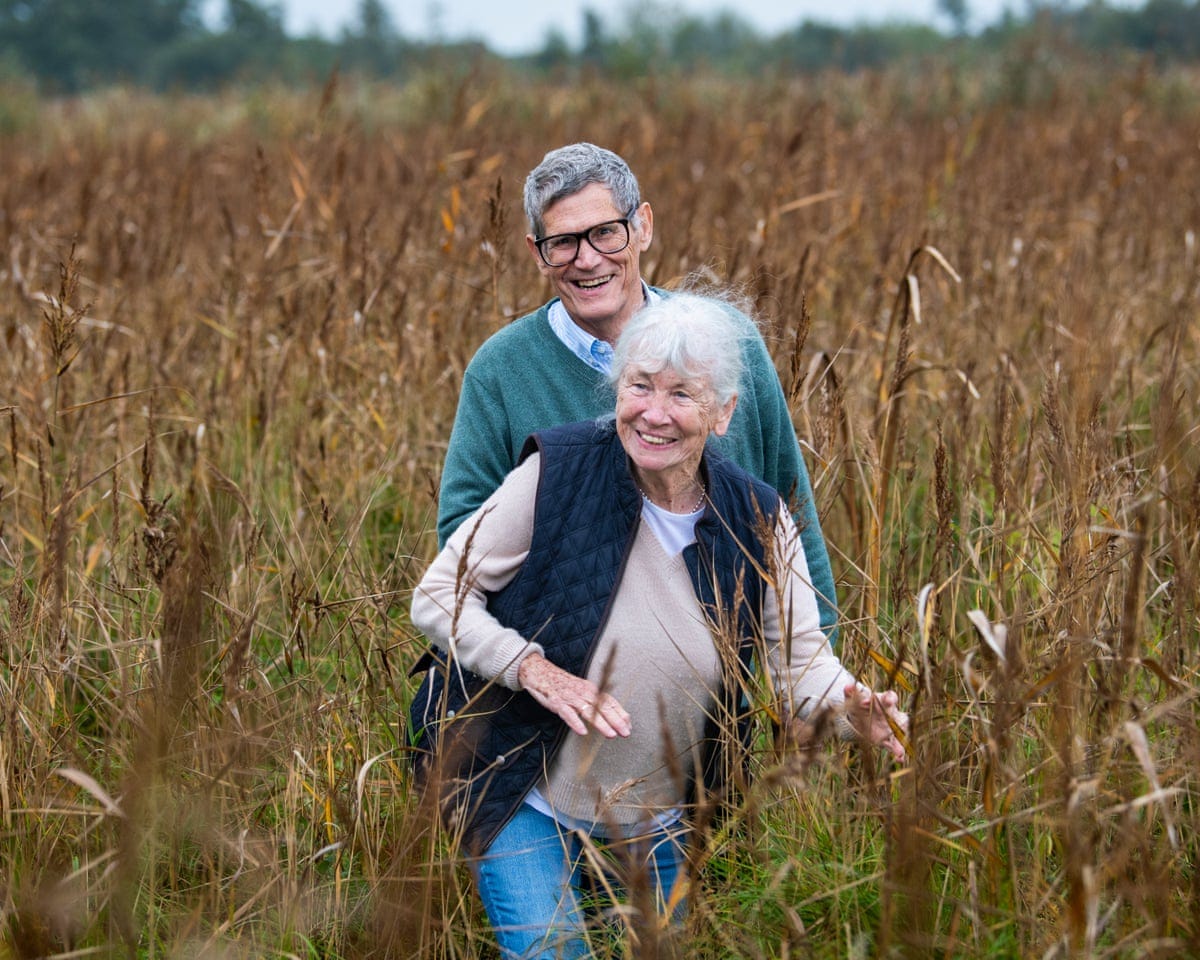
🌿 A Norfolk couple win a third court battle to save Catfield Fen. Tim and Geli Harris have spent 15 years and £1.5m of their own money defending a rare wetland on their farm in the Broads. This month the high court ruled that Natural England failed in its legal duty to protect the fen from nitrates and phosphates washing off arable fields, calling the cause “the most basic level of common sense”. The fen is home to 2,500 species, including fen orchids, bitterns and swallowtail butterflies.
In a world where you can be like anyone, be like the Harris’.
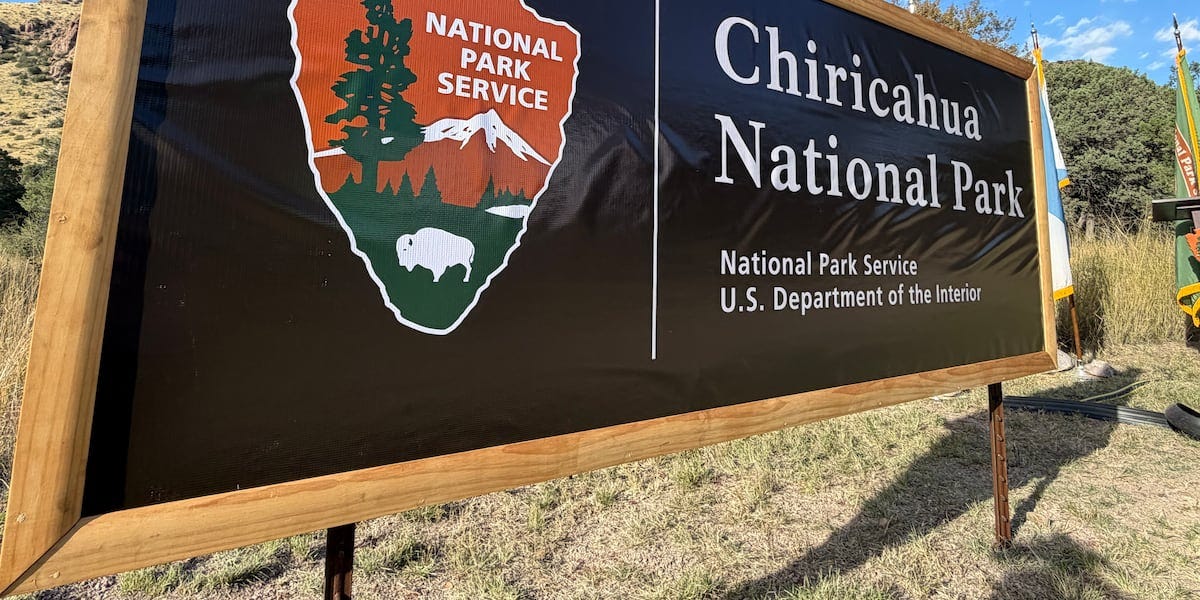
🏜️ America gets its first new national park in six years. On 20 October, Arizona’s Chiricahua National Monument, known as the “Wonderland of Rocks”, became the 64th US national park. The bill passed Congress with bipartisan support and was signed by, of all people, Donald Trump. Good news from US public lands is rare enough these days that I’ll take it.
🐦 Native wildlife bounces back on a Samoan island after rats and pigs are removed. Over 12 expeditions and more than 130 days in the field, teams cleared invasive rats and feral pigs from Nu’utele Island, with a former New Zealand rugby star helping to hunt down the last pigs. Within a month, researchers found active nests of the shy ground dove, whose largest remaining population in Samoa lives there. Native seedlings are now carpeting the forest floor. The next step is to start a new population of the Mao, a threatened native forest bird.
💭 My thoughts? Island restorations are some of the most dependable wins in conservation. Remove whatever is eating everything, and nature recovers remarkably fast.

That’s all from me this week folks. My music recommendation is Aperture by Harry Styles. What a bop.
George, the Grumpy Optimist 💚