


Happy Monday. 👋
Welcome back to this week’s edition. I took a break last week because I was travelling back from Japan and jet lag was hard work. I did have a wonderful trip, reminding myself how much we can learn from the world on sustainability and climate action.

Let’s dig into some good news!
👀 News to make you feel good this week
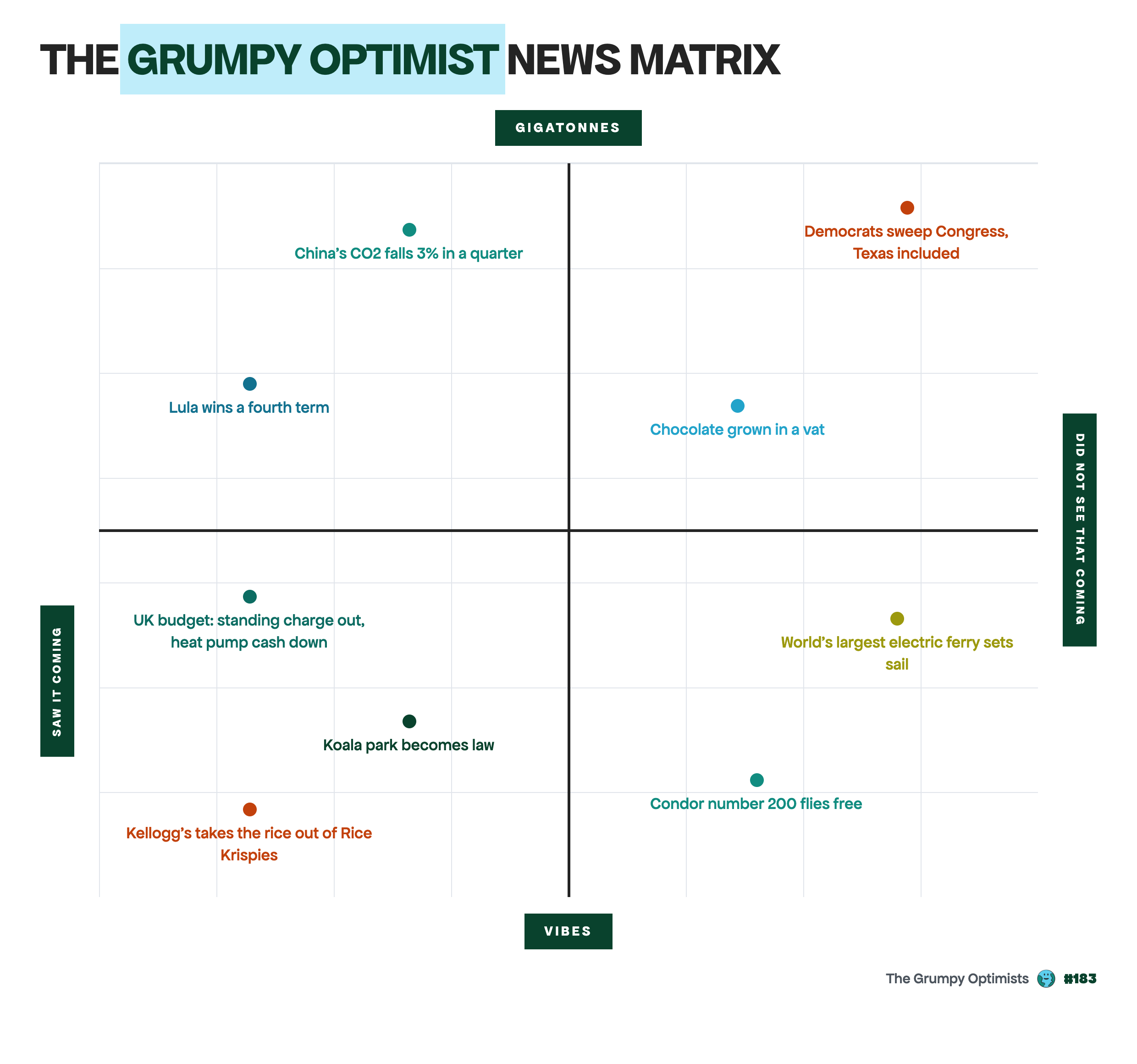
🗳️ Democrats take both houses of Congress in the US midterms. On 3 November Democrats won the House and the Senate, where they’ll hold at least 54 seats after flipping Maine, Iowa, Ohio and North Carolina and pulling off upsets in Texas, South Carolina and Kansas. CBS says Republicans struggled against “an unpopular war” in Iran and “persistent affordability issues”. The League of Conservation Voters says all 12 candidates on its Dirty Dozen list lost. That’s those who oppose climate change via their votes.
💭 My thoughts? We’ve had to deal with an anti-climate change administration for the last few years. The impact has been pretty big. This shift shows that we’re back into a cycle of climate action being prioritised. Perhaps an interesting one as an early signal, we’re seeing an increase in activity in the US with Zevero.
🇨🇳 China’s CO2 emissions fall 3% in their biggest drop since Covid. Emissions fell 3.1% in the third quarter of 2026, with coal use down 3% and oil down 4%, according to analysis for Carbon Brief. New solar, wind and nuclear output grew twice as fast as electricity demand, and EVs hit a record 67% of new car sales in September, plus half of heavy trucks. China is also exporting the cuts globally. This year’s clean-tech exports will avoid around 450m tonnes of CO2, about what Brazil emits.
🌳 Lula wins a fourth term, and the Amazon gets a reprieve. I’ve banged on about the Amazon a lot lately, so here’s the follow-up. Brazil’s presidential runoff on 25th October went to Lula, after he narrowly lost the first round. Carbon Brief’s analysis reckons his presidency has already kept at least 20,000 km² of Amazon standing since 2022, roughly the size of New Jersey. Experts told Carbon Brief that’s probably an underestimate. His opponent, Flávio Bolsonaro, was expected to follow his father’s “anti-environmental” line, so this one mattered a lot.
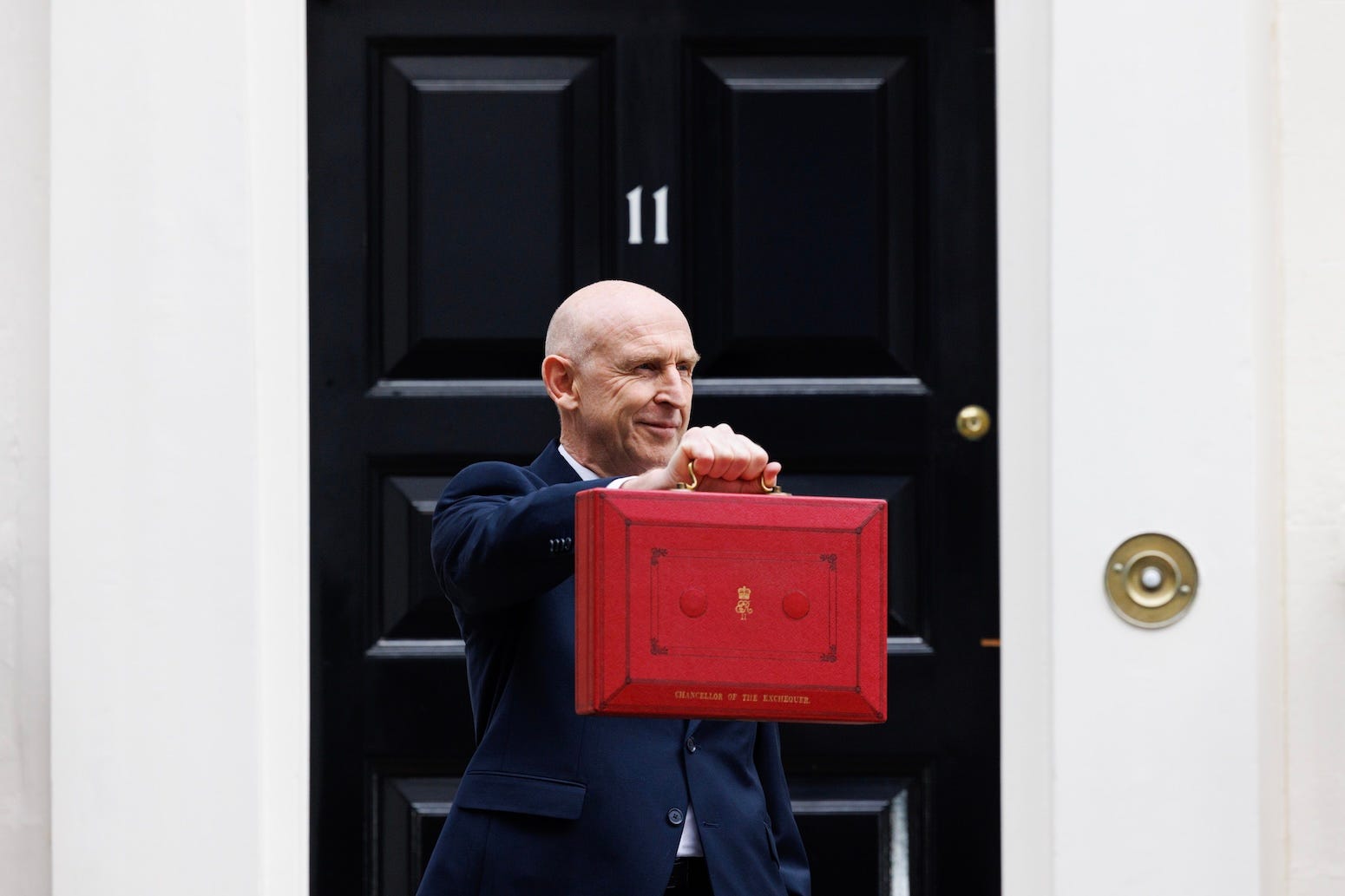
🏠 UK budget: the gas standing charge goes, but heat pump funding takes a hit. Back in #181 I worried the £7,500 Boiler Upgrade Scheme would be cut to pay for defence. The grant survived, but its funding is frozen at £400m, around £800m less than planned. Analysts told Carbon Brief that could mean roughly 100,000 fewer heat pumps over three years. The good bit is that the gas standing charge, about £108 a year, is being moved onto unit rates, which narrows the gap between electricity and gas prices.
🥣 Kellogg’s takes the rice out of Rice Krispies. UK Rice Krispies are now made from rice flour instead of whole grains of rice, and Coco Pops from rice flour and cornflour. Kellogg’s says “changing weather conditions are affecting the quality and availability” of the rice it uses.
🍫 Startups are growing chocolate in vats as cocoa prices bite. Cocoa topped $12,000 a tonne in 2024 after drought and then flooding hit growers, and US “candy” prices are up 44% since 2021. Closer to home, McVitie’s Penguins can now only be called “chocolate flavoured” because they’ve replaced so much chocolate. So me, this one says a lot about how we can respond to climate shocks.
💭 My thoughts? Do we really need to grow coffee for instant coffee, or chocolate for low cost cakes, when what people want is the flavour of the ingredient. My friends over at Prefer are using fermentation to produce bean free coffee and cocoa to help cover the price rises for consumers and create more resilient supply chains.
🐨 Australia’s Great Koala National Park is finally law. After more than a decade of campaigning, the NSW parliament has passed the bill creating the park, moving 178,000 hectares of state forest out of logging and into a 475,000-hectare protected network on the Mid North Coast. It’s home to an estimated 12,000 koalas, 36,000 greater gliders and over 100 threatened species, and it cuts native forest logging in NSW by about 20%.
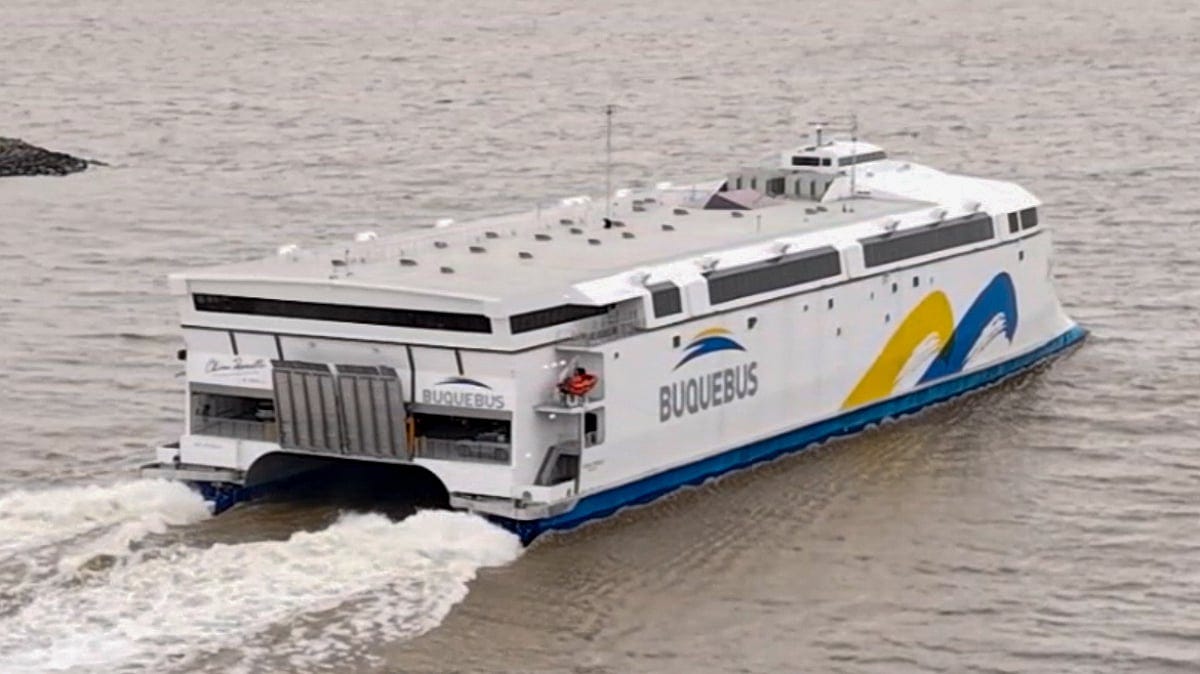
⛴️ The world’s largest electric ship is now carrying passengers. China Zorrilla, a 130-metre ferry built by Incat in Tasmania, has started sailing the 55km across the Río de la Plata between Buenos Aires and Colonia for Uruguay’s Buquebus. It runs on more than 250 tonnes of batteries and charges for 40 minutes at each end. It was designed for diesel and LNG, until the builders switched it to fully electric during construction.
🦅 The 200th zoo-hatched California condor flies free. In 1986 there wasn’t a single California condor left in the wild. Now seven young birds have been released on Yurok land near the Oregon border, including the 200th hatched at San Diego Zoo Safari Park to make it into the wild. They join 26 condors already flying there. Bonus fact: young condors get the zoomies, hopping, running in circles and flapping about out of pure excitement. Nobody has confirmed whether number 200 did. I’m choosing to believe it.
This blog was written after a great weekend of cycling in the cold, eating bangers and mash, buying artwork and building IKEA furniture, what a dream!
My music recommendation for the week is Our Love is Alive, just because it’s really fun.
George, the Grumpy Optimist 💚